Endereço
1206-038, No.100 de lingong
estrada, cidade de Linyi, Shandong
Email:dylanl@chinagxbm.com
Horas de trabalho
De segunda a sexta-feira: das 7h às 19h
Fim de semana: 10:00 - 17:00
Endereço
1206-038, No.100 de lingong
estrada, cidade de Linyi, Shandong
Email:dylanl@chinagxbm.com
Horas de trabalho
De segunda a sexta-feira: das 7h às 19h
Fim de semana: 10:00 - 17:00
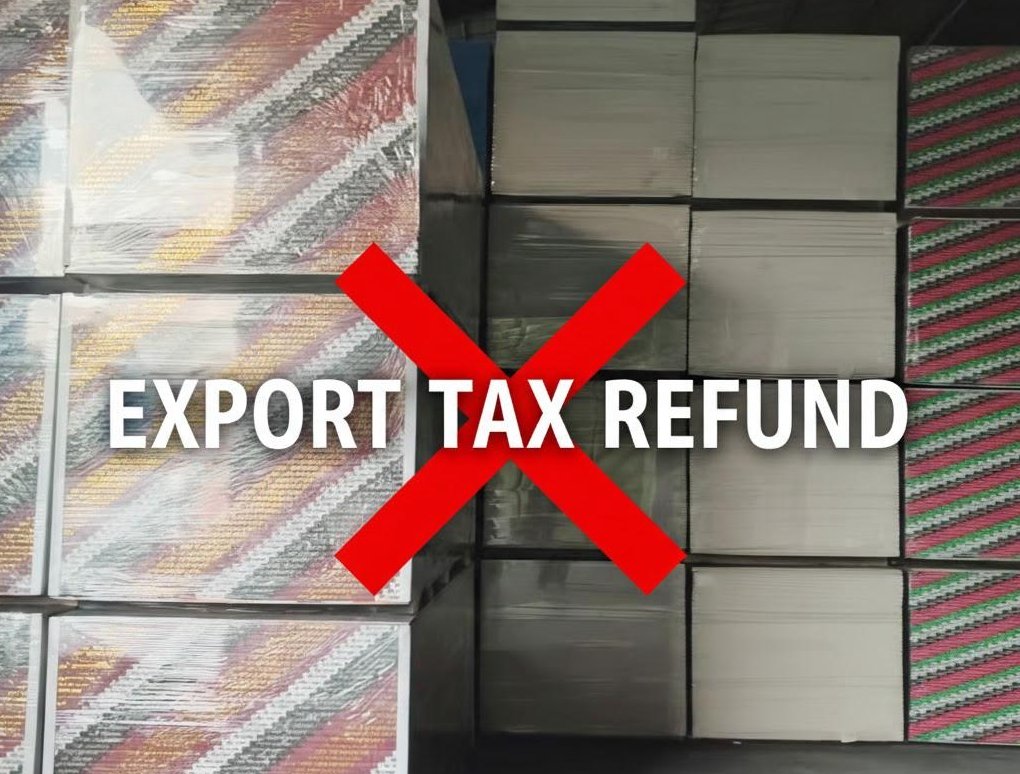
The Ministry of Finance has just announced that, effective from April 1, 2026, the export tax rebate for gypsum board and other gypsum products will be canceled. In recent years, China, as the world’s largest producer and exporter of gypsum board, has held a significant position in the international market. However, with the adjustment of domestic policies, the export tax rebate for gypsum board and related products has undergone a major shift—from a reduction from 13% to 9% in 2024 to complete cancellation now. This policy change has brought considerable challenges to the industry. The cancellation of the export tax rebate means increased costs for businesses and squeezed profit margins, posing unprecedented difficulties for gypsum board export enterprises. So, under these circumstances, where does China’s gypsum board export industry go from here? This article explores the policy background, current industry status, challenges, and response strategies.
The export tax rebate policy has long been a key measure in China to encourage exports, providing strong support for industries including building materials like gypsum board. By refunding a portion of the value-added tax (VAT), companies could compete in international markets with more competitive pricing. However, as China’s economic structure transforms and upgrades, alongside tightened regulations on resource-intensive and high-pollution industries, export tax rebates for certain sectors have been gradually adjusted or even canceled.
The export tax rebate for gypsum board and related products (such as gypsum) was first reduced from 13% to 9% in 2024 and has now been completely canceled. This shift is driven by the following considerations:
China’s gypsum board export volume has grown rapidly over the past decade, with key markets including Southeast Asia, the Middle East, Africa, and parts of Europe and North America. Statistics show that China accounts for nearly 40% of the global gypsum board export market, earning its reputation as a “gypsum board powerhouse.” However, after the rebate was reduced to 9% in 2024, companies already faced rising costs, and the complete cancellation now exacerbates the situation. The industry is currently dealing with the following realities:
The cancellation of the export tax rebate presents multifaceted challenges to the gypsum board industry:
Despite the impact of the export tax rebate cancellation, Chinese gypsum board companies are not without options. Here are several viable response strategies:
While the cancellation of the export tax rebate has caused short-term pain for the industry, it also serves as an opportunity to push for industrial upgrading and resource optimization in the long run. Chinese gypsum board companies must seek breakthroughs amid challenges, gradually moving away from reliance on policy benefits and toward winning markets through technological innovation and brand building.
At the same time, the government and industry associations should play a guiding role by formulating reasonable industrial policies and support measures to help companies navigate difficulties. For instance, special funds could be established to support technological R&D, or international industry standards could be promoted to enhance the global recognition of Chinese gypsum board.
The reduction of the export tax rebate to 9% in 2024 and its subsequent complete cancellation have undoubtedly sounded an alarm for China’s gypsum board export industry, but challenges and opportunities coexist. In the context of increasingly fierce global competition, companies must proactively adapt to policy changes and accelerate transformation and upgrading to maintain their foothold in international markets. The future path for China’s gypsum board exports may be more arduous, but through market diversification and enhanced core competitiveness, the industry still holds the potential to achieve a transformative leap from “high volume” to “high quality.”
Where does China’s gypsum board export industry go from here? The answer lies in the strategic adjustments and innovation capabilities of the companies themselves, as well as in the collaborative efforts between the industry and policymakers. Only through such synergy can new opportunities be forged amid change, securing a stronger voice for China’s building materials industry in the global market.

 Portuguese
  English
  Spanish
  French
  Arabic