Address
1206-038,No.100 of lingong
road,Linyi city,Shandong
Email:dylanl@chinagxbm.com
Work Hours
Monday to Friday: 7AM - 7PM
Weekend: 10AM - 5PM
Address
1206-038,No.100 of lingong
road,Linyi city,Shandong
Email:dylanl@chinagxbm.com
Work Hours
Monday to Friday: 7AM - 7PM
Weekend: 10AM - 5PM
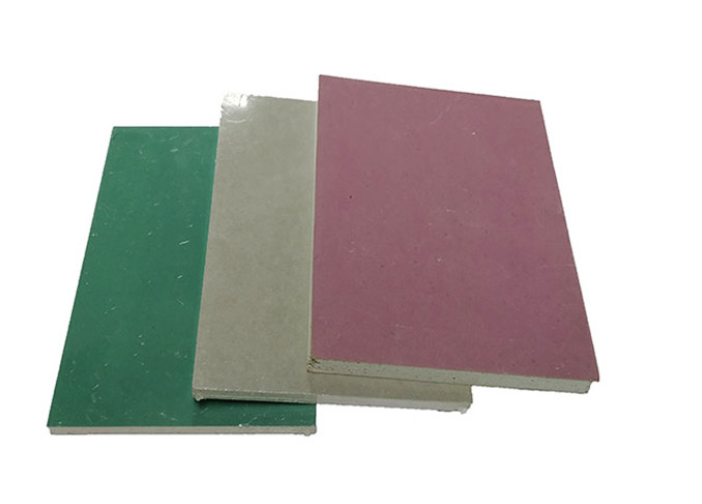
When people search for drywall types, moisture resistant drywall, or fireproof drywall, they usually want one clear answer: which board should I use for my project?
The best choice depends on the room, the level of moisture, and whether the space needs better fire protection. In this guide, we compare standard drywall, moisture resistant drywall, and fireproof drywall so you can choose the right product for homes, offices, and commercial interiors.
Standard drywall is the most common type of interior wall board. It is used in dry areas where basic wall finishing is enough.
If the room does not have unusual moisture or fire requirements, standard drywall is often the most practical choice.
Moisture resistant drywall is designed for areas where humidity, steam, or occasional water exposure is more likely. It is a popular choice for spaces that need more protection than standard drywall can provide.
Moisture resistant drywall is not waterproof, but it performs better than standard drywall in humid environments. That is why it is often searched as bathroom drywall, kitchen drywall, or moisture resistant board.
The term fireproof drywall is commonly used in search queries, although it is more accurate to say drywall with improved fire performance. This type of board is chosen where better fire protection is needed.
If you are comparing fireproof drywall with standard drywall or moisture resistant drywall, the main difference is performance in higher-risk areas.
Here is the simple breakdown:
Best for dry, general-purpose interior spaces.
Best for humid rooms and areas with occasional splashes or steam.
Best for spaces where better fire protection is needed.
Each board has a different purpose, and the right choice depends on the room conditions and project requirements.
One of the most important things to understand is that drywall performance is not based on the board alone.
A wall’s real performance depends on:
That means even the best fireproof drywall or moisture resistant drywall can underperform if the full system is not installed correctly. For that reason, many contractors and builders look at the complete wall assembly, not just the panel itself.
Use standard drywall in dry rooms where basic wall finishing is enough.
Use moisture resistant drywall in bathrooms, kitchens, laundry rooms, basements, and other humid spaces.
Use fireproof drywall in garages, utility rooms, shared walls, and other areas where fire performance matters more.
Is the room dry, humid, or safety-sensitive?
Some spaces need better moisture resistance, while others need better fire protection.
Even the right board can fail if seams, openings, and edges are not handled correctly.
Choosing the right drywall type can improve durability, reduce repairs, and support better performance over time.
The term is commonly used in search, but it usually refers to drywall with improved fire performance. It helps slow fire, but it does not make a building completely fireproof.
Yes. Moisture resistant drywall is commonly used in bathrooms, kitchens, and laundry rooms where humidity is higher.
Yes. Standard drywall works well in many dry interior spaces such as bedrooms, living rooms, and offices.
For many kitchen applications, moisture resistant drywall is a better choice than standard drywall because it handles humidity more effectively.
Fireproof drywall is the better choice when improved fire performance is needed, especially in higher-risk areas.
Choosing between standard drywall, moisture resistant drywall, and fireproof drywall becomes much easier once you match the board to the room.
For the best result, always consider the full wall system, not just the panel itself. That approach improves durability, safety, and long-term performance.
 English English
  Spanish
 French
 Arabic
 Portuguese
